
Coaching Philosophy
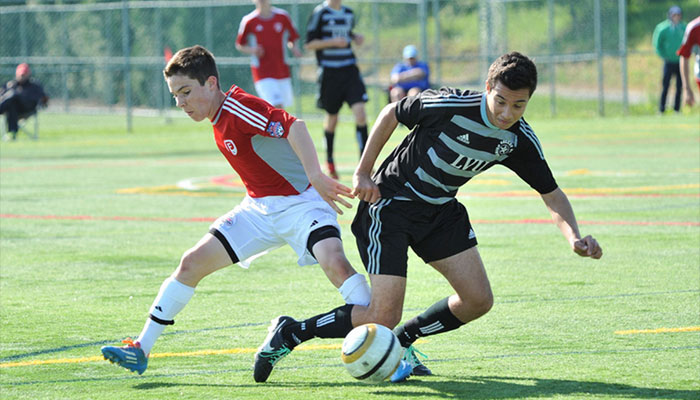
The biggest difference between LVU teams and LVU Programs is the use of competition over a ten month period to foment soccer development. Competition, and training for competition, are used to build confidence and intelligence on the field. Soccer skill and technique without pressure does not reflect the stresses and adversities LVU players will experience in college and professional soccer programs. The LVU Team experience falls between the ages of 9-18 and is meant to prepare players in every sense of the word for life on and off the field after LVU.
Self-improvement through concepts such as revolving accountability and integrity are stressed on LVU Teams. Our coaching staff continually reminds players that the coaches are not solely responsible for a player’s development, players are responsible in large part. They are given player manuals, technical and soccer related assignment, and journaling projects. LVU players are intelligent players, and intelligent players assess personal performance and fix mistakes. Self-improvement skills are the most powerful tools a coach can give a player.
LVU players are special. They understand they must make sacrifices in exchange for their passion of soccer. The harder they work and sacrifice, the more satisfying and rewarding the return. Nothing of great value comes easy. This is a basic principle at LVU. Players learn that their development is a never ending ascent in pursuit of their goals. Every step along the way a small victory.
LVU understands that athletics and academics are intertwined. Much of the learning on the field translates to the classroom and life. Hard work, deliberate practice, and personal assessment are some of the core values at LVU that transcend the soccer field. Perhaps one of the most important lessons is that of time management. LVU players spend a tremendous amount of time travelling, training and competing. They must learn to manage and budget their time. When there is no time they learn to make it.
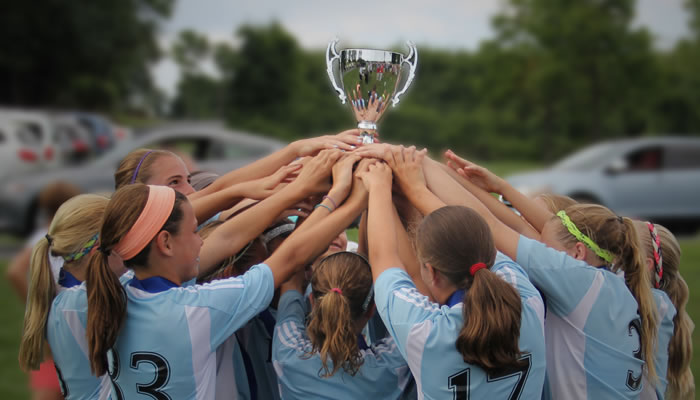
Soccer is a team sport. LVU players are taught to be independent and responsible. Once they master their personal performance they are taught the value of leading and motivating others. We know that eleven players whom play as individuals cannot achieve what eleven players working in harmony toward a common purpose, can achieve. Empathy is a core value on LVU Teams. No player should ever feel alone, on or off the field. LVU players are taught the meaning of the word UNITED. LVU Teams excel not only on the field, but are unique in their behavior, appearance, unity, and traditions off the field. At LVU Team comes first.
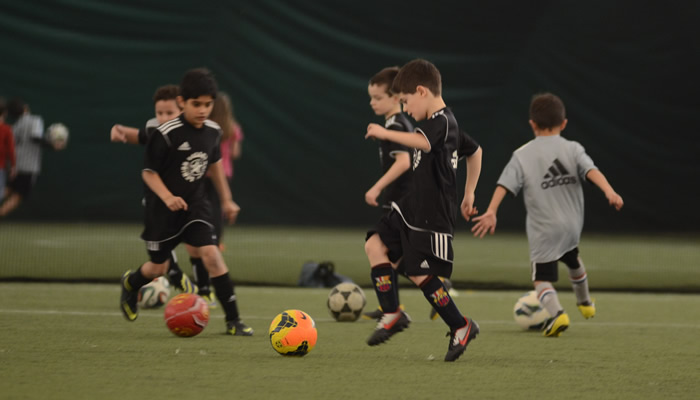
Our programs are built around our highly qualified coaches. Though it may appear LVU teams train through the year without breaks, this is not the case. LVU coaches work very closely with their team and “keep its pulse.” Breaks and recesses are scheduled as needed. We do not believe in taking whole seasons or months off from the game we love. A series of well placed, shorter breaks, are scheduled by coaches as needed. LVU coaches use the process of Periodization throughout the year. Teams are intelligently managed to peak at the correct times of the year. It is impossible to give the same amount of energy output 100 % of the time. Periodization allows coaches to manage the rest, recovery, and output of LVU athletes providing for timely outcomes.
Many of our alumni have come back to LVU to join our coaching staff. This ensures that the LVU philosophy and tradition will carry on. Alumni are always welcome. It is common to walk upon an LVU session where numerous Alumni are participating. Whether staying fit for their own college or professional career, preparing themselves for a tryout, or just having fun, alumni show LVU players “how it’s done,” and provide them with the greatest message of all… “I did it, and so can you.”
Emphasis on competition does not create a contradiction at LVU. We embrace competition. We believe it fosters development, and helps us to measure it. Through competition great lessons are learned, and true character is shown in players, coaches and parents. In terms of competition, the tougher the better. In top college programs, teams are boarding planes numerous times a year, even for conference games. Travel, environment, playing outside the comfort zone: these are norms in college and beyond. National and international competition help teach the maturity and discipline to handle these experiences.
There is a wonderful bi-product to competition… trust, respect, and friendship. To prepare, travel, and compete brings people together for a common purpose. In terms of winning and losing, the highs are very high, and the lows are very low. Our experiences are emotional. To battle through them together cements bonds. Our players create lifelong relationships at LVU. They are far more important than any win. Relationships are, in the end, how we are all measured… “What sort of teammate was I, what sort of son or daughter was I, what sort of father or mother was I?” Relationships are ultimately how LVU measures success.
It is a core belief at LVU that players need to accept responsibility for their own development. Coaches, teammates, competitions, parents, etc… are all factors that help a player succeed. However, we believe the strongest indicator of future success is the inner drive and determination of a player.
A typical in-season training week for a LVU player is as follows:
Monday - 30 minutes of time spent with ball (on own)
Tuesday- 1.5 hours of LVU Team training
Wednesday- 1.25 hours LVU optional session or Academy
Thursday- 1.5 hours of LVU Team training
Friday- 30 minutes of time spent with ball (on own)
Saturday- Competitions
Sunday- Off
A typical yearly overview is as follows:
July- Team mini-camp and friendly games scheduled
August- Pre-season tournament and team training begins (2 x’s per week)
September-
October- League begins, team training continues (2x’s per week)
November- Regional tournament (Bethesda)
December-
February- Indoor league and training begins (1-2 x’s per week)
March- National or International competition (Dallas/Mundielito)
April-
May- State Cup, League, training (2x’s per week)
June- Training/mini-camp preparation for regionals